


 Free Newsletter


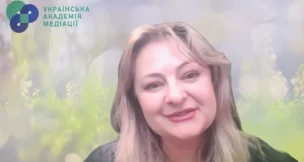
Luiza Romanadze, president of the Ukrainian Academy of Mediation, speaks on Zoom with her Massachusetts counterparts.
Massachusetts mediation program comes to aid of Ukraine war effort
Kris Olson//May 12, 2026//


 Listen to this article
In brief
- Massachusetts-based Veterans Mediation trained Ukrainian mediators during the ongoing war
- Program adapts military-focused conflict resolution techniques to nonviolent mediation
- Training delivered remotely via Zoom despite warzone disruptions
- Partnership expected to expand with ongoing collaboration and mentorship programs
When Boston attorney Harvey Weiner began to scale back his practice and ease into semi-retirement, he asked himself a question: What should I do with my newfound free time?
Weiner’s search led him to the organization Veterans Mediation. A Vietnam veteran, Weiner took VM’s training course, and he has been a volunteer trainer and on its leadership team ever since. But he never could have imagined that one day he would apply his skills in an active war zone on the other side of the globe.
Sharon Tracy and Susan Wallace of Quabbin Mediation launched Veterans Mediation more than 18 years ago after realizing that veterans and military personnel and their families might prefer to work with mediators who were connected in some way to the military.
Through their military training, soldiers and veterans were trained to solve their conflicts by violence, Weiner notes.
“This gets ingrained in the veteran when he or she leaves the service,” he says.
Tracy and Wallace created a five-day, 35-hour mediation course with military emphasis. They also offered shorter one- and two-day courses.
“We teach them through military examples, military scenarios, how to solve their conflicts — not by violence, but by peaceful means — with mediation skills,” Weiner says.
There are now nearly 1,000 alumni of the program. Until 2020, VM’s courses were all free, thanks to funding secured by former Senate President Stanley Rosenberg and administered by what was then known as the state’s Department of Veterans Services.
Tracy and Wallace retired in 2024, but the program has since been picked up by the central Massachusetts military and veterans nonprofit Homefront Strong.
The program proved the value of its concept long ago. But unexpectedly, Weiner and other members of the leadership team recently learned that the skills they have been inculcating in veterans and military personnel can transcend geography, cultural differences and language barriers, too.
Earlier this year, about 4,500 miles away, Luiza Romanadze, a lawyer and president of the Ukrainian Academy of Mediation, was coming to realizations like those of Tracy and Wallace years ago. Ukrainian soldiers, veterans and civilians were having challenges resolving conflicts and otherwise adjusting to how radically their lives changed when Russia invaded their homeland four years ago. Like their American counterparts, Ukrainian soldiers and veterans had been trained to resolve conflicts by violence.
As Romanadze began to develop a mediation training program for veterans and active military, she sought guidance on the internet. A search for “veterans’ mediation” led her to Massachusetts, and a relationship was born.
 Veterans Mediation eagerly agreed to offer an adapted version of its training, pro bono, to dozens of Ukrainian mediators over the course of three two-hour Zoom sessions. The VM trainers were sensitive to the fact that because the Ukrainian war was on the country’s own soil, it might have spawned problems that American veterans had not experienced, according to Weiner.
Weiner says he marveled at how seamlessly and instantaneously Zoom translated between English and Ukrainian. It might have looked on screen like the poorly dubbed foreign films of his youth, with sounds not matching the lip movement. But the messages came across, loud and clear.
That is not to say that there were no obstacles to providing mediation training in an active war zone. Ukrainian mediators logging in from the frontlines sometimes had to turn off their cameras to maintain a steady internet connection. Sometimes, a mediator would lose power and be unable to join or need to seek refuge abruptly in a bomb shelter.
But the Ukrainian mediators happily endured the inconveniences to gain the benefit of the experience of their American counterparts.
At the end of the third training session, participants on each continent raised a Ukrainian toast to victory with “horilka” — better known in America as “vodka,” which is now a forbidden word in Ukraine. Weiner says he searched in vain at his local big-box liquor store for “horilka” before realizing that such a label would be confusing to U.S. consumers. Instead, Weiner crossed out the label on his vodka bottle and wrote “horilka” on it, which satisfied his new Ukrainian friends.
The relationship between the American and Ukrainian mediators will continue, Weiner happily reports. Veterans Mediation has been given a one-hour time slot to appear virtually at an annual weeklong seminar run by the Ukrainian Academy of Mediation, which last year attracted 3,500 attendees, according to Weiner.
Another possibility being discussed is a buddy program, in which Ukrainian mediators would be paired with American veterans’ mediators who would offer advice and guidance when challenges arise.
“We hope to have a long-term continuing relationship because they’re nice people,” Weiner says. “And also, it helps veterans.”
Related Articles
Related Content





Verdicts & Settlements
- Injury during baby’s adenoidectomy leads to stroke
- Construction worker’s hand caught in cement mixer
- Worker trapped in freezer, dies during steam cleaning
- Pedestrian, 69, hit by motor vehicle while in crosswalk
- Four-vehicle pileup leaves driver with spinal cord injury
- Nursing home staff blamed for kidney-failure death
- Pharmacy’s late delivery blamed for patient’s death
- Man, 25, drowns after swimming lesson at fitness club





Opinion Digests
- Jurisdiction – Forum selection clause – Non-signatory
- Criminal – Responsibility
- Attorneys – Lien
- Landlord and tenant – Default judgment
- Zoning – Constructive grant – Comprehensive permit
- Fraud – False Claims Act – Settlement share
- Civil practice – Discovery – Cybersecurity
