


 Free Newsletter

Federal judge tosses SOX whistleblower retaliation claim
Plaintiff didn’t provide employer notice of protected activity
Eric T. Berkman//May 8, 2026//


 Listen to this article
In brief
- Federal judge granted summary judgment to employer in SOX whistleblower retaliation case.
- Former executive claimed he was fired after raising concerns about misleading “real-time” product claims.
- Court found exec reasonably believed shareholders could be misled but failed to show employer knew he was engaging in protected whistleblower activity.
- Attorneys say ruling clarifies notice requirements for Sarbanes-Oxley whistleblower claims.
An executive at a publicly traded tech company who claims he was terminated for expressing concern that his company planned to make misleading statements about a product launch could not bring a whistleblower retaliation claim under the federal Sarbanes-Oxley Act, a U.S. District Court judge has ruled.
Defendant Salesforce, Inc., a maker of customer relationship management software, planned to announce at its 2022 “Dreamforce” conference that it had created a customer data platform that automatically updated in “real time.”
On Sept. 7, 2022, plaintiff Karl Wirth, the company’s senior vice president of product management, apparently expressed concern internally that the announcement would be made despite the product being months away from “real-time” capability.
Wirth, who was terminated two days later, claims he believed at the time that such an announcement would mislead shareholders.
Salesforce argued in a motion for summary judgment that Wirth could not sustain a whistleblower claim under Sarbanes-Oxley, which Congress enacted in 2002 to boost the transparency of corporate financial disclosures, because he did not do enough to give Salesforce a reason to suspect he was engaging in whistleblower behavior at the time of his termination.
Judge Brian E. Murphy agreed.
“Every complaint that timing expectations may not be met is not protected whistleblower activity, and it simply cannot be enough to put employers on notice of possible whistleblowing,” Murphy wrote. “Though Wirth repeatedly raised concerns about the team’s ability to deliver on the planned Dreamforce announcement, and Wirth himself may have reasonably believed that such an announcement could defraud shareholders (or at least provided evidence that might support a jury so finding), … Wirth’s communications to Salesforce executives were insufficient to put Salesforce on notice of his protected activity.”
The 15-page decision is Wirth v. Salesforce, Inc., Lawyers Weekly No. 02-240-26.
‘Useful roadmap’
Boston attorneys John J. Cotter and Kathleen Parker, who represented Salesforce, declined to comment, and plaintiff’s counsel Jacob W. Burkhead, Patrick J. Hannon and Hampton M. Watson, also of Boston, did not respond to interview requests.
But David S. Rubin, who defends employers in whistleblower actions, said the decision provides a good roadmap for anyone drafting a summary judgment brief in a similar type of case.
The Boston lawyer also pointed out that most management-side employment practitioners spend more time advising their clients on whistleblower issues as they arise than they do in actual litigation.
“But this case makes it really clear how hard it is to see these issues coming,” Rubin said. “People argue over expectations and strategy all the time at work, but at what point [is someone] alleging potential fraud if you go forward with a strategy? This case makes clear how grey that area is and how difficult it can be to advise on it. That’s one reason why I think Sarbanes-Oxley can be a difficult law to navigate.”
Boston whistleblower attorney Robert M. Thomas Jr., who teaches a class on whistleblower practice at Boston University, said the decision also provides useful guidance to attorneys who advise employees.
“Previous courts have done this in the context of the False Claims Act’s anti-retaliation provision, and now it is helpful to have these elements articulated in the Sarbanes-Oxley context,” he said.
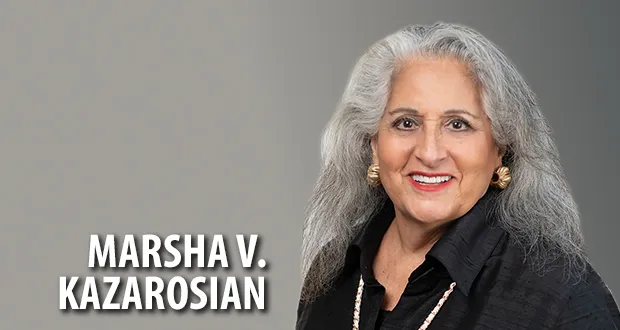
Marsha V. Kazarosian of Haverhill, who has represented plaintiffs in SOX whistleblower claims, said the court may have foreclosed a trial-worthy claim.
The operative question is whether, at the time of Wirth’s firing, Salesforce knew or suspected that he was engaged in protected activity, she explained. The court seemed to agree that Wirth repeatedly expressed concerns that Salesforce was on the verge of making a huge public announcement about its product that promised things it was not capable of doing, she said.
Accordingly, Kazarosian said, it would be reasonable to infer that Salesforce may have suspected that Wirth was saying that Salesforce was on the precipice of committing fraud.
Consequently, when Salesforce fired Wirth two days after he articulated those concerns to a company co-founder, it would not be unreasonable to infer that it fired him in retaliation for his exercise of protected activity, she said.
Pushing back on deadlines and open disagreement with the boss is not enough. If you see what you suspect is fraud, then you have a choice. Say nothing and you may be complicit. But if you speak up explicitly, then you can protect yourself.
— Royston H. “Rory” Delaney, Newton
 Pushing back on deadlines and open disagreement with the boss is not enough. If you see what you suspect is fraud, then you have a choice. Say nothing and you may be complicit. But if you speak up explicitly, then you can protect yourself.
Because the court has to view the record in the light most favorable to the non-movant, in this case Wirth, all reasonable inferences should be drawn in his favor, Kazarosian added.
“Therefore, it could be reasonably inferred that Salesforce knew Wirth was engaged in protected activity when it fired him, and that would meet his burden at summary judgment,” she said. “The concern here is that this is a question of fact that the court has foreclosed as a matter of law.”
Royston H. “Rory” Delaney of Newton said the decision sends a message to potential Sarbanes-Oxley whistleblowers that if they are concerned about shareholder fraud, they must be direct and put their concerns in writing, telling the employer how its actions might impact shareholders.
“Pushing back on deadlines and open disagreement with the boss is not enough,” Delaney said. “If you see what you suspect is fraud, then you have a choice. Say nothing and you may be complicit. But if you speak up explicitly, then you can protect yourself.”
Alleged retaliation
Salesforce hired Wirth in 2020 when it acquired Evergage, Inc., a company he co-founded.
The acquisition included Evergage’s customer data platform, or CDP, which unifies customer data from multiple sources to enable the use of data to complete numerous functions.
One of Wirth’s tasks was to lead the unification of Evergage’s product, Interaction Studio, with Salesforce’s CDP. That involved integrating “real time” capabilities into the CDP.
Salesforce was holding its annual Dreamforce conference, at which it often announces new offerings and which thousands of industry professionals, financial analysts and media members attend, in September 2022.
The company apparently planned to announce the integration of Interaction Studio with CDP — and CDP’s resulting real-time capabilities — at the conference.
In the months leading up to the conference, Wirth apparently expressed concerns about the timeline for achieving real-time CDP.
THE ISSUE: Could an executive at a publicly traded tech company who claims he was terminated for expressing concern that his company planned to make misleading statements about a product launch bring a whistleblower retaliation claim under the federal Sarbanes-Oxley Act?
DECISION: No (U.S. District Court)
LAWYERS: Jacob W. Burkhead, Patrick J. Hannon and Hampton M. Watson, of Hartley, Michon, Robb, Hannon, Boston (plaintiff)
John J. Cotter of K&L Gates, Boston; Kelly E. Bungard and Kathleen Parker, of Reed Smith, Boston (defense)
On March 7, 2022, his former manager communicated to other Salesforce executives over Slack that Wirth had told marketing that they would not be ready to announce real-time CDP at Dreamforce.
The manager also communicated that Wirth had stated that the CDP/Interaction Studio working groups were not making enough progress; that there were still major decisions that needed to be made; that the “data spaces slip” for CDP was a “huge issue”; and that they “shouldn’t announce,” among other things.
On April 5, 2022, Wirth sent a message through Slack to Salesforce executives stating that he had not been able to get “CDP senior leadership” to take seriously the fact that they were nine months from “supposing to ship a joint solution” with “massive questions unresolved.”
Then, on Sept. 7, 2022, two weeks before Dreamforce, Wirth messaged a colleague in marketing that the company was “launching Real-Time CDP in a big way at Dreamforce” even though CDP was not currently real-time and would not be for nine more months.
Two days later, Salesforce terminated Wirth.
Over the ensuing months, Wirth reported Salesforce’s conduct to the Securities and Exchange Commission.
In July 2023, he filed a whistleblower retaliation complaint against Salesforce in U.S. District Court.
Salesforce moved for summary judgment in January 2026.
Notice requirements
Murphy found that Wirth satisfied the first requirement for making out a whistleblower retaliation claim under SOX by showing he engaged in “protected activity” — more specifically, showing he had a subjective belief and objectively reasonable belief that the conduct he reported constituted fraud or a violation of SEC rules.
“A jury could find that a reasonable person in Wirth’s position could have concluded, given the delays in achieving the ‘real-time’ capabilities to be announced at Dreamforce, that Salesforce nevertheless planned to announce ‘real-time’ CDP at Dreamforce, and that doing so would defraud shareholders, who would make investing decisions in response to the announcement,” Murphy wrote. “SOX does ‘not require a complainant to “prove a violation of the substantive laws,” but merely to have “a reasonable belief of a violation of the laws.”’”
However, Murphy continued, Wirth did not make the requisite showing that Salesforce knew or suspected he engaged in protected activity.
As the judge pointed out, employees routinely raise concerns about timelines and expectations but not every such complaint is protected whistleblower activity, and Wirth’s communications to that effect did not rise to that level.
“Therefore, the Court grants Salesforce’s motion for summary judgment,” Murphy said.
Related Articles
Related Content





Verdicts & Settlements
- Injury during baby’s adenoidectomy leads to stroke
- Construction worker’s hand caught in cement mixer
- Worker trapped in freezer, dies during steam cleaning
- Pedestrian, 69, hit by motor vehicle while in crosswalk
- Four-vehicle pileup leaves driver with spinal cord injury
- Nursing home staff blamed for kidney-failure death
- Pharmacy’s late delivery blamed for patient’s death
- Man, 25, drowns after swimming lesson at fitness club





Opinion Digests
- Jurisdiction – Forum selection clause – Non-signatory
- Criminal – Responsibility
- Attorneys – Lien
- Landlord and tenant – Default judgment
- Zoning – Constructive grant – Comprehensive permit
- Fraud – False Claims Act – Settlement share
- Civil practice – Discovery – Cybersecurity
