


 Free Newsletter

Judge can disregard jury findings on 93A
But SJC reduces damages in case involving fatal fall
Brandon Gee//May 23, 2013//


 Listen to this article
 A judge could award Chapter 93A damages to the parents of a patron who died after falling down the stairs at a Boston bar even though a jury had cleared the owners of the establishment on an accompanying wrongful death claim, the Supreme Judicial Court has ruled.
The SJC further ruled that in “limited circumstances” liability may arise under Chapter 93A based on a building code violation. But it found that Superior Court Judge Elizabeth M. Fahey erred in her calculation of nearly $7 million in 93A damages for the parents of the deceased patron and must reduce the award on remand.
The defendant bar owners argued that the jury’s findings on the wrongful death claim — that their negligence and failure to comply with the building code were not substantial contributing causes of the death — constrained the judge’s fact-finding ability in ruling on the 93A claim.
But a unanimous SJC declined the defendants’ and multiple amicus parties’ “invitation to deviate from the well-established principle that ‘[a] judge may make independent and, therefore, different, findings on the c. 93A aspect of a case that arises from the same facts which gave rise to parallel common law claim.'”
Justice Margot G. Botsford said the court found “clear support for the conclusion that the staircase was so obviously noncompliant that any reasonable person would have realized it presented a serious danger to patrons of Our House East. Additionally, the defendants knew several people had fallen down the staircase since its construction, and the defendants and management employees of Our House East had been warned multiple times that the staircase was in a dangerous condition and should be fixed.”
The 38-page decision is Klairmont, et al. v. Gainsboro Restaurant Inc., et al., Lawyers Weekly No. 10-087-13. The full text of the ruling can be found by clicking here.
Mixed bag
Plaintiffs’ counsel Thomas M. Elcock of Prince, Lobel, Tye in Boston said he was surprised that the defendants expended so much effort arguing that the judge was bound by the jury’s factual findings when determining the 93A claim.
“We perceived the law was very well established over 20 years,” said Elcock, who argued the case with his colleague Joseph S. Sano and Jeffrey A. Newman of Boston and Marblehead. “We never were seriously worried that the court would come to a different conclusion. Perhaps the issue was pushed by the fact that defendants were initially represented by out-of-state counsel who perceived the law should be different.”
Eric N. Shor, a lawyer at Nutter, McClennen & Fish in Boston who was not involved in the suit but followed it closely, said the SJC had never opined on “a case where the jury said the defendants’ conduct didn’t cause the harm, and then the judge said, ‘Jury, you’re wrong; the defendants did cause the harm’ and awarded damages.” (Click here to read a Lawyers Weekly op-ed by Shor about the case.)
Shor had hoped the court would reconcile and explain why a trial court judge can conclude that a jury’s findings are wrong when deciding a 93A claim, while a judge is bound by a jury’s findings in deciding equitable claims other than 93A claims. But the court failed to do that.
“The takeaway from this case is that there’s no big change on the issue of whether a judge can reach a different conclusion than the jury on the 93A claim,” Shor said. “It makes it a lot harder to defend a negligence claim that also has a 93A component because convincing the jury is not enough.”
While the decision is a victory for plaintiffs overall, the defendants in Klairmont are likely the ones celebrating since the SJC ordered that the damages be reduced, Shor added.
The court ruled that the plaintiff parents could recover damages under 93A only to the extent that their son would have been able to recover, had he survived. Loss of consortium damages, while available under the wrongful death act, may not be awarded in a separate cause of action brought on behalf of the estate of the decedent, who was found unconscious at the bottom of the staircase and died two days later, the SJC found.
“Without evidence of conscious pain and suffering, the plaintiffs don’t have much of a damages case left,” Shor said.
But Newman, the plaintiffs’ co-counsel, said the parents are happy with the result because the SJC recognized the defendants’ wrongdoing and issued a ruling that they believe will help prevent dangerous situations in the future.
The decision will serve as a deterrent in part because the SJC agreed with Fahey that a building code violation can sometimes give rise to a Chapter 93A claim, which, Newman said, will dissuade businesses from cutting corners.
“Businesses will hear that,” he said. “They will make places safer because they’re going to be more concerned with complying with the rules.”
Ironically, that aspect of the SJC’s decision also is being praised by Michael D. Riseberg of Adler, Pollock and Sheehan in Boston, who authored an amicus brief for the Massachusetts Defense Lawyers Association on behalf of the defendants. Riseberg said defense lawyers feared the SJC might interpret the regulation at issue so broadly as to make any building code violation in itself a violation of Chapter 93A.
“A building code violation can give rise, but plaintiffs have to prove it was in a commercial context and unfair and deceptive — something like a profit-seeking motivation,” Riseberg said. “I think the court did what we asked and said that a violation alone is not a per se violation of 93A.”
Riseberg said the court’s ruling on that issue overshadows his disappointment with judges still being able to reserve 93A claims for themselves and make legal findings contrary to a jury’s.
“The court basically decided not to revisit that issue, and it appears to be resigned for the time being to allowing plaintiffs to have a second bite at the apple. … But it doesn’t make matters any worse on that issue,” he said. “We think the change that comes out of it is positive because it clarifies the building code issue.”
J. Michael Conley of Kenney & Conley in Boston, who authored an amicus brief for the Massachusetts Academy of Trial Attorneys on behalf of the plaintiffs, bristled at Riseberg’s apple metaphor.
“It doesn’t unfairly give plaintiffs two bites at the apple because there are a number of cases where the judge makes a finding contrary to the plaintiff that was in conflict with the jury,” Conley said. “It’s a two-way street here. The Legislature made the call that the consumer protection policy that underlies the statute is best left in the hands of the judiciary.”
Conley said he was disappointed that the damages awarded will have to be so drastically reduced on remand, but that he cannot argue with the court’s reasoning.
“Apparently, there’s no relief akin to wrongful death relief [under Chapter 93A],” he said. “It could be considered a shortcoming in the statute.”
As a practical matter, Shor said, the decision is still a major victory for plaintiffs because the reduction in damages will only apply to wrongful death cases. Shor said there are far more personal injury cases with accompany Chapter 93A claims that won’t be subject to the limited damages ordered by the SJC in Klairmont.
On the other hand, Cary Silverman of Shook, Hardy & Bacon in Washington, D.C., said the consumer protection law should not have been in play in the first place.
“I think the court properly found that wrongful death damages ought not be awarded in a consumer protection case, but on the other hand this is a case where [93A] shouldn’t have applied at all,” said Silverman, who authored a brief on behalf of the American Tort Reform Organization. “Personal injury should cover it. It was putting a square peg in a round hole. This is a case that really raised eyebrows.”
The defendants were represented by Michael F. Aylward and Richard W. Jensen, of Morrison Mahoney in Boston. Aylward declined to comment.
History
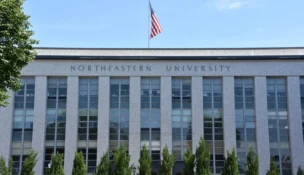
Northeastern University student Jacob S. Freeman fell down the stairs at Our House East at about 1:46 a.m., on April 1, 2007, and died as a result of his injuries two days later. Freeman’s parents brought suit in Superior Court against the owners of the bar and restaurant for wrongful death and violation of Chapter 93A.
While there were no witnesses to Freeman’s fall, evidence presented at trial showed that the defendants had failed to obtain a building permit for the stairs when they were initially constructed and later remodeled. The staircase also was shown to be steep, narrow, poorly lit and lacking proper railings. The entrance to the stairway was covered with dark vinyl strips rather than a door. There also was testimony that others had fallen down the steps and that owners and management knew the staircase was an accident waiting to happen.
The parties had competing theories for what caused Freeman’s fall. The defense argued that Freeman fell because he was drunk and because he was in an area of the bar where customers are not allowed, coming back up the stairs from the basement.
The plaintiffs argued that Freeman fell from the top of the staircase while taking a phone call and that his injuries could have been prevented or mitigated if the staircase were up to code.
While a jury concluded that the defendants were negligent and violated the building code, it decided that neither of those factors was a substantial contributing cause of Freeman’s death and found in the defendants’ favor on the wrongful death claim.
Fahey, who had reserved the Chapter 93A claim for herself, disagreed and awarded the plaintiffs treble damages of $6.7 million, plus attorneys’ fees and costs.
Fahey determined that the plaintiffs were entitled to 93A damages because the defendants had intentionally avoided complying with the building code for decades, which qualified as “unfair and deceptive acts,” and that the result was Freeman’s fatal fall.
The defense, which had argued that a 93A claim could not be applied to a wrongful death case, among other objections, appealed.
Reasoning
The SJC did not fault Fahey’s findings, only her award of damages.
“[A]s representatives of their son’s estate, the plaintiffs may recover in connection with the c. 93A claim only such damages as were causally related to the defendants’ unfair and deceptive conduct and were actually sustained by Jacob up to the point of his death; they are not entitled to recover for any impairment of Jacob’s future earing capacity after his death,” Botsford wrote.
The SJC found that the damages awarded by Fahey do not conform with those principles because she awarded each of the parents $750,000 essentially for loss of consortium and $744,480 as the amount of economic loss their son’s estate had sustained as a result of his death. Those damages were trebled for a total of $6.7 million; Fahey also awarded $2.1 million in attorneys’ fees and about $250,000 in costs.
While the type of damages Fahey awarded have been invalidated, the court found that Fahey did not err in trebling them because her conclusion that the defendants’ unfair and deceptive conduct was both willful and knowing was amply supported by the evidence in the case.
The SJC also ruled that Fahey’s award of attorneys’ fees should not be overturned because “it was not clearly erroneous for the judge to find that the defendants’ settlement offers of $25,000 and $75,000 were unreasonable in relation to Jacob’s death.”
However, Botsford said, “it appears that the judge’s assessment of $2,098,875.25 in attorney’s fees should be reconsidered in light of the substantial reduction in the amount of damages the plaintiffs may recover on remand.”
The court found that the plaintiffs had the unquestionable right to bring a claim under 93A pursuant to the Massachusetts survival statute and that Fahey rightfully reserved the claim for herself. The justices also agreed with Fahey’s handling of whether a building code violation can constitute a violation of Chapter 93A.
“We agree with the judge that not all building code violations — indeed, very few — will give rise to violations of c. 93A, either because they would lack the unfairness or deceptiveness present in this case or because they do not arise in trade or commerce,” Botsford wrote.
Click here to read coverage of a 2011 decision in this case.
CASE: Klairmont, et al. v. Gainsboro Restaurant Inc., et al., Lawyers Weekly No. 10-087-13
COURT: Supreme Judicial Court
ISSUE: Can a judge reserve a G.L.c. 93A claim for herself and make findings contrary to a jury’s in a case involving parallel common-law claims decided by the jury?
DECISION: Yes
Related Content





Verdicts & Settlements
- Injury during baby’s adenoidectomy leads to stroke
- Construction worker’s hand caught in cement mixer
- Worker trapped in freezer, dies during steam cleaning
- Pedestrian, 69, hit by motor vehicle while in crosswalk
- Four-vehicle pileup leaves driver with spinal cord injury
- Nursing home staff blamed for kidney-failure death
- Pharmacy’s late delivery blamed for patient’s death
- Man, 25, drowns after swimming lesson at fitness club







Opinion Digests
- Jurisdiction – Forum selection clause – Non-signatory
- Criminal – Responsibility
- Attorneys – Lien
- Landlord and tenant – Default judgment
- Zoning – Constructive grant – Comprehensive permit
- Fraud – False Claims Act – Settlement share
- Civil practice – Discovery – Cybersecurity
